How to buy a steak from a butcher counter without guessing
Four questions that get you a better steak than reading the labels ever will.
September 22, 2026 · 4 min read
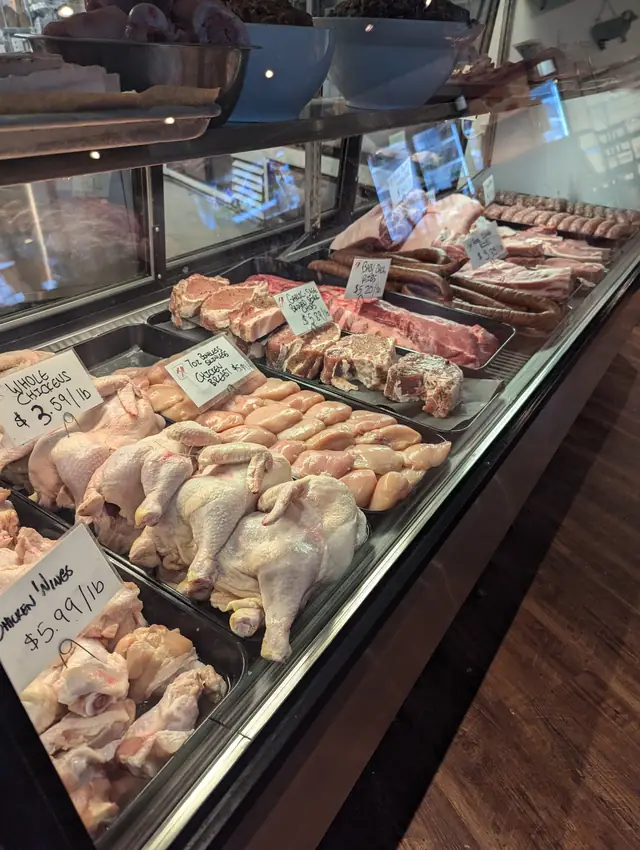
A supermarket meat aisle is designed so you never have to speak to anyone. Everything is wrapped, labelled and priced, and the only decision left is which tray to pick up. A butcher counter is the opposite. It is designed around a conversation, and people who are not used to having that conversation often end up buying worse meat than they would have at a supermarket, simply because they pointed at the most expensive thing and hoped.
It is not complicated. Here is what actually helps.
Say how you are cooking it before you say what you want
The single most useful sentence at a butcher counter is not the name of a cut. It is something like: two of us, cast iron pan, Thursday night, about twenty minutes. Or: eight people, grill, and I would rather not stand over it.
Cut names describe where the meat came from on the animal. They do not describe what you are trying to do. A butcher who knows the method and the head count can steer you toward something that will actually work, and will often steer you away from the expensive thing, because the expensive thing is frequently wrong for the job.
Thickness matters more than grade for most home cooking
A thin steak gives you almost no margin. By the time the outside has browned, the middle is already past where you wanted it, and no amount of resting recovers that. A thicker cut lets you build a hard crust and still land the inside where you asked for it.
This is one of the clearest advantages of a real counter. The steaks on the tray are a starting point, not a fixed menu. Ask for them cut thicker. In a shop doing whole animal butchering the rest of the animal is genuinely on the premises, so a thicker cut is a normal request rather than a favour.
Ask what was cut most recently
Freshness at a butcher counter is not a date printed on a sleeve. It is a question you can ask out loud, and the answer changes through the week because the case is built from whole animals rather than restocked from boxes.
Asking what was cut this morning tends to get you both the freshest thing in the case and, quite often, the best value, because it is whatever the butcher has most of right now.
Let the counter talk you down in price
People assume a butcher will upsell. In practice, a counter that wants you back next week will happily point you at the cheaper cut that suits your Tuesday better. Chuck, round, brisket and the cuts that reward time are where the real cooking lives, and they cost a fraction of the front of the case.
If you want the shop's own version of that argument, buy the house made items. The ground beef, the sausage and the bacon are made here daily from the same animals, which is exactly why they are worth the counter space.
A short script, if you want one
- What did you cut this morning?
- I am cooking for four on a pan. What would you give me?
- Can you cut that thicker, about two fingers?
- What would you do with it, if you were cooking it tonight?
That is the whole thing. Four sentences, no jargon, and you will walk out with better meat than the label reading would have found.
Where to try it
The Butcher's Pantry is at 33475 Station St in Solon, open Tuesday through Friday from ten until six and Saturday from ten until four. Everything in the case is available by the pound, custom cuts and special requests are welcome, and the people behind the counter are classically trained chefs with more than thirty years between them. If you are buying for a crowd, call 440 999 0990 ahead and it can be put aside.
The cuts worth knowing by name
You do not need a diagram of a cow, but four names will cover almost everything you are likely to want. Ribeye is the rich one, marbled through the middle, forgiving in a pan and the cut most people mean when they say steak. Strip is leaner and firmer with a cleaner beef flavour, and it takes a hard sear well. Sirloin is the everyday option, less tender than either but a fraction of the price and perfectly good cooked properly and sliced thin.
The fourth is the one worth asking about: whatever the butcher calls the cut they are pleased with this week. Every whole animal produces a handful of cuts that are excellent and unfamiliar, and they are cheap precisely because the name means nothing to most customers. That is the single best value in any butcher counter, and you will only ever find it by asking.
What to do with it when you get home
Take the steak out of the fridge a good while before it goes near heat. A cold centre forces you to overcook the outside to get the inside anywhere near where you wanted it, which is the most common way a good cut is wasted at home.
Dry the surface properly before it hits the pan. Moisture on the outside boils rather than browns, and browning is where most of the flavour of a seared steak comes from. Then rest it for about as long as you cooked it. Resting is not a ritual, it is the difference between the juices staying in the meat and running out across the board.
The Butcher's Pantry & Restaurant, (440) 999-0990
Call (440) 999-0990More articles
What whole animal butchering actually changes about your dinner
Why the case looks different on a Tuesday than it did on a Saturday, and why that is the point.
Why the brisket is only on Friday and Saturday
Smoking a brisket is not a service you can switch on at lunchtime, and the calendar is the honest version of that.